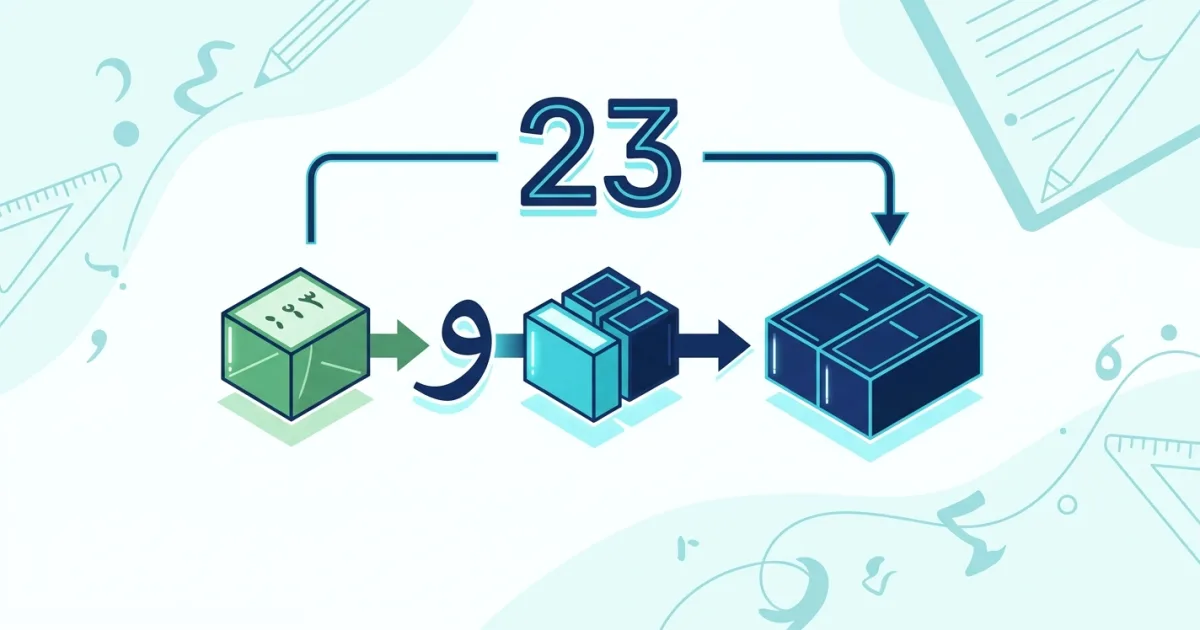
Arabic numbers from 21 to 99 are often written in words with the ones part before the tens part. For example, 23 is ثلاثة وعشرون, which is built as “three and twenty.” The word و connects the ones and tens parts. This does not mean Arabic digits are backwards; it is a feature of Arabic compound number words.
Quick Answer
Arabic numbers from 21 to 99 are commonly written as unit + و + tens in words, so 23 is ثلاثة وعشرون, literally “three and twenty.” This unit-before-tens order is a standard grammatical rule for Arabic compound number words. It does not mean the numeric digits themselves are reversed or read backwards; it is simply how the words are spoken and written.
What Are Arabic Numbers from 21 to 99?
When discussing Arabic numbers, it is helpful to distinguish between written digit symbols and spoken or written words. This discussion focuses primarily on Arabic number words—the actual words used to speak or write out numbers in Modern Standard Arabic.
Numbers from 21 to 99 (excluding the even tens like 30, 40, or 50) are known as compound numbers. In Arabic, these compound numbers are formed by combining a single-digit unit (1 through 9) with a tens value (20 through 90). Unlike modern English, which places the tens before the units (such as "twenty-three"), Arabic commonly structures these words with the unit first.
Key Rule
For many Arabic compound numbers from 21 to 99, the word order is unit + و + tens. For example, 23 is ثلاثة وعشرون, not عشرون ثلاثة.
Why the Ones Come Before the Tens in Arabic Words
The practice of placing the unit before the tens is a historical grammatical convention of the Semitic language family, which includes Arabic. This word order is not unique to Arabic; older forms of English and modern German also use this structure (for example, the German word for 23 is dreiundzwanzig, literally "three and twenty").
This linguistic preference does not mean that the mathematical value of the number is reversed. It is simply a rules-based convention for how compound ideas are spoken. The ones part represents the primary starting point of the compound addition, and the tens part is added to it to complete the value.
Step-by-Step: 23 as ثلاثة وعشرون
- Start with the number 23.
- Split the number into its two components: 3 (the unit) and 20 (the tens).
- Apply the Arabic compound number pattern, which places the unit first.
- Write the word for three: ثلاثة.
- Add the connector letter و (pronounced "wa"), which means "and."
- Write the word for twenty: عشرون.
- Combine them to get the complete basic standalone word form: ثلاثة وعشرون.
What و Means in Arabic Compound Numbers
The letter و (waw) is a conjunction in the Arabic language. It is commonly translated as "and." In the context of compound numbers, it serves as a grammatical bridge that links the unit value to the tens value.
Without this connector, the compound number would lack proper grammatical structure. By saying ثلاثة وعشرون, you are literally saying "three and twenty." The addition of the two numbers creates the final value of 23.
Arabic Digits vs. Arabic Number Words
A common point of confusion for language learners is the difference between digit symbols and written words. Arabic script is written and read from right to left. However, multi-digit numbers (whether written in Western numerals like 23 or Eastern Arabic numerals like ٢٣) are read with the largest place value first when looking at the overall mathematical structure.
For example, in the numeral ٢٣:
- The digit on the left (٢) represents the tens place (20).
- The digit on the right (٣) represents the ones place (3).
This is the exact same place-value layout used in Western mathematics. Therefore, the digits themselves are not reversed. The apparent "backwards" nature only arises when you translate the spoken words literally into English word order.
Examples from 21 to 99
To help visualize this pattern, here are several examples of compound numbers written in their basic standalone Arabic word forms:
- 21: واحد وعشرون (one and twenty)
- 22: اثنان وعشرون (two and twenty)
- 23: ثلاثة وعشرون (three and twenty)
- 24: أربعة وعشرون (four and twenty)
- 35: خمسة وثلاثون (five and thirty)
- 47: سبعة وأربعون (seven and forty)
- 99: تسعة وتسعون (nine and ninety)
These examples represent standard nominative forms. In actual sentences, the endings of these words may change based on grammatical case and the gender of the noun being counted.
Why Not عشرون ثلاثة?
Writing or saying عشرون ثلاثة is an English-style word order that does not exist in standard Arabic. While it might seem more natural to an English speaker because it matches "twenty three," it is grammatically incorrect in Arabic. The language requires the smaller unit to lead the compound phrase, joined by the connector و.
Gender and Grammar Note
In Modern Standard Arabic, numbers must agree with the nouns they describe. The unit part of a compound number (1 through 9) often changes gender depending on whether the counted noun is masculine or feminine. Additionally, the tens part can change from ending in "-oon" (like عشرون) to "-een" (like عشرين) depending on the grammatical case of the sentence. While these rules are important for advanced grammar, the fundamental unit-before-tens word order remains constant across all variations.
Common Mistake
Wrong: عشرون ثلاثة (trying to write "twenty three" using English word order).
Correct: ثلاثة وعشرون (literally "three and twenty").
Why: Arabic compound number words do not follow English word order; they require the unit to come before the tens, connected by the word for "and."
Comparison Table
| Number | Arabic Word Form | Literal Order | English Meaning | Common Mistake | What to Notice |
|---|---|---|---|---|---|
| 21 | واحد وعشرون | one + and + twenty | twenty-one | عشرون واحد | Uses the basic word for "one." |
| 22 | اثنان وعشرون | two + and + twenty | twenty-two | عشرون اثنان | Uses the basic word for "two." |
| 23 | ثلاثة وعشرون | three + and + twenty | twenty-three | عشرون ثلاثة | The standard model for compound numbers. |
| 24 | أربعة وعشرون | four + and + twenty | twenty-four | عشرون أربعة | The unit ends with a feminine marker in this form. |
| 35 | خمسة وثلاثون | five + and + thirty | thirty-five | ثلاثون خمسة | The tens word changes to thirty. |
| 47 | سبعة وأربعون | seven + and + forty | forty-seven | أربعون سبعة | The tens word changes to forty. |
| 99 | تسعة وتسعون | nine + and + ninety | ninety-nine | تسعون تسعة | Both parts use the root word for nine. |
Common Mistakes to Avoid
- Writing in English Order: Translating "twenty-three" directly as عشرون ثلاثة.
- Forgetting the Connector: Writing ثلاثة عشرون without the و.
- Confusing Digits with Words: Thinking that because the words say "three and twenty," the digits ٢٣ must mean 32.
- Assuming Dialects are Identical: While Modern Standard Arabic forms are consistent, spoken dialects may shorten or alter pronunciation.
Quick Practice
- What is the basic pattern for many Arabic numbers from 21 to 99?
- Which is the correct basic form for 23: ثلاثة وعشرون or عشرون ثلاثة?
- What does و do in ثلاثة وعشرون?
- What is 35 in a basic Arabic word form?
- Does ٢٣ mean 23 or 32?
- Why should you avoid saying Arabic numbers are simply "backwards"?
Answers
- The basic pattern is unit + و + tens.
- The correct basic form is ثلاثة وعشرون.
- It acts as a conjunction meaning "and" to connect the unit and tens.
- The basic form is خمسة وثلاثون.
- It means 23.
- Because the mathematical place value system is the same as in Western numerals; only the spoken and written word order for compound numbers places the unit first.
FAQs
Why are Arabic numbers from 21 to 99 written with the ones before the tens?
This is a standard grammatical convention of the Arabic language. It structures compound numbers by stating the smaller unit first, followed by a connector meaning "and," and then the larger tens value.
How do you write 23 in Arabic words?
In its basic standalone form, 23 is written as ثلاثة وعشرون, which literally translates to "three and twenty."
What does و mean in Arabic numbers?
The letter و (waw) means "and." It serves as the grammatical connector between the unit and the tens in compound numbers.
Is عشرون ثلاثة correct for 23?
No. That order mimics English structure and is grammatically incorrect in Arabic. The unit must always come before the tens.
Are Arabic digits reversed?
No. While Arabic script is read from right to left, numeric digits like ٢٣ are written with the highest place value on the left, just like Western numerals. The digit ٢٣ represents 23, not 32.
Do Arabic number words change with gender or grammar?
Yes. The unit part can change gender to match the counted noun, and the tens part can change endings depending on the grammatical case in a sentence. However, the unit-before-tens order remains the same.
Summary
When writing Arabic compound numbers from 21 to 99 in words, remember the fundamental rule: place the unit first, add the connector و, and then write the tens. Avoid using English-style word order like عشرون ثلاثة, and keep in mind that this word pattern does not change the standard place value of the digits themselves.